


Tehreem Fatima
Tehreem Fatima is a researcher and human rights advocate currently pursuing a Master’s in Human Rights and Democratisation under a European Union scholarship. She focuses on policy research, climate governance, and human rights in South Asia, with a particular emphasis on women’s rights and empowerment. She contributes to international publications and research.
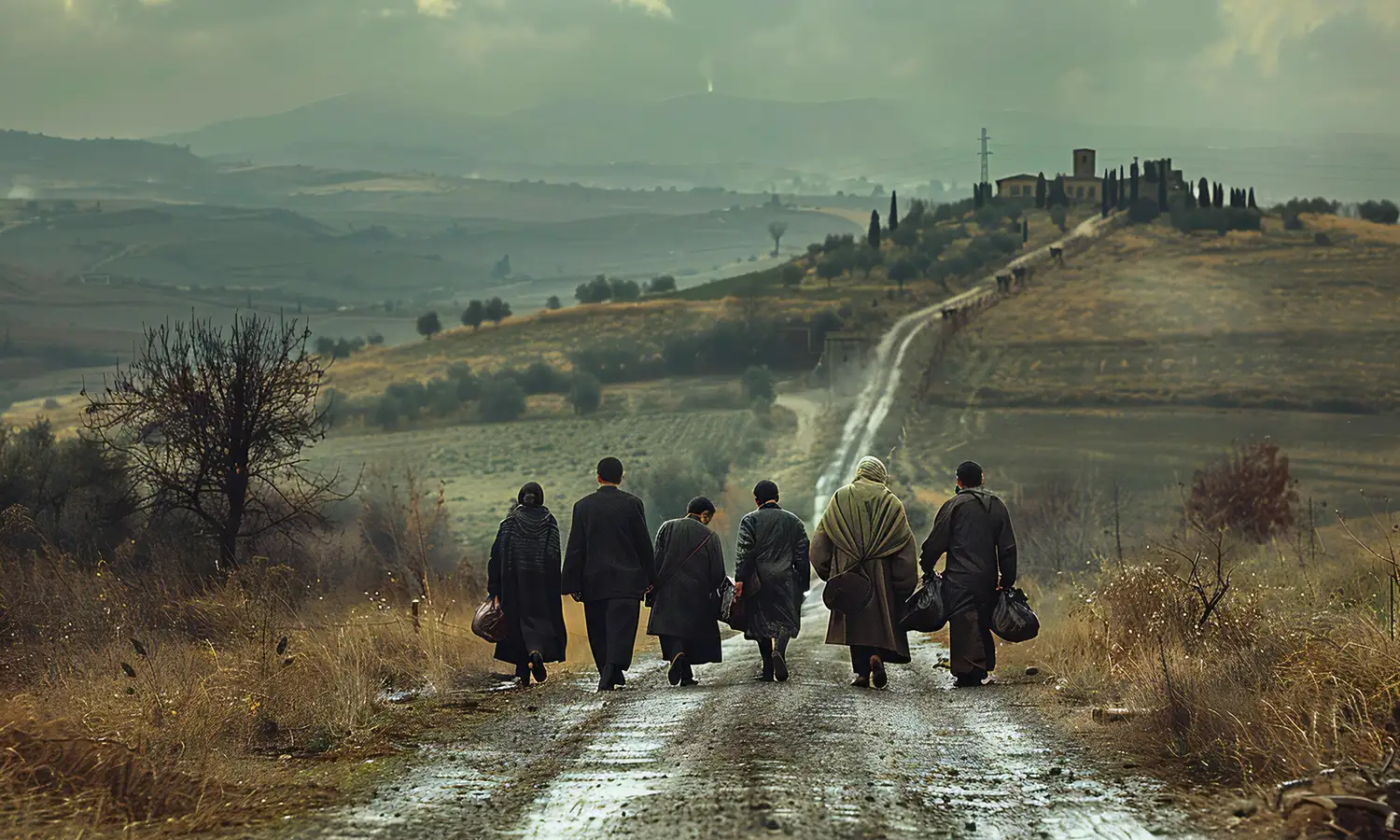
When people lose their homes to floodwater, they don’t disappear into statistics; they migrate, stay, and reshuffle whole communities. Pakistan’s recent flood shocks demonstrate that climate-driven displacement is no longer an occasional phenomenon; it is a structural reality that our policies still ignore. The 2022 floods displaced millions and pushed women, fishermen, small farmers, and daily wage workers into longer, more uncertain movement (UN Women, 2022). According to NDMA, more than 33 million people were affected that year, and over 8 million were displaced from their homes, making it one of the largest internal movements in the country’s history. In 2025, fresh monsoon surges submerged thousands of villages and left whole districts without basic services, forcing many to migrate temporarily or settle elsewhere (ReliefWeb, 2025; AP, 2025). Early provincial assessments showed that around 9,000 villages were inundated across Sindh and southern Punjab, and nearly 1.2 million people experienced short-term displacement in the first weeks of the monsoon. That’s the problem I want to focus on: Pakistan needs clear, practical rules for managing climate-driven migration, not only emergency handouts.
The first gap is simple: Pakistan has no dedicated policy framework for climate-induced internal migration. We do follow the emergency management cycle: preparedness, mitigation, response, recovery, and reconstruction, and there are livelihood and reconstruction plans on paper. But these plans mainly focus on rebuilding damaged areas, not on what happens when displacement stretches for weeks or months. When embankments break or a harvest is wiped out, people don’t always move straight to nearby towns; many stay in temporary shelters, makeshift camps, schools, or raised embankments because returning home isn’t possible. These hosting spaces suddenly carry extra pressure without enough water, sanitation, or health services. The result is informal, crowded living conditions where people end up stuck between two places, not officially displaced, yet not fully resettled either. In 2025, relief updates showed villages remaining underwater for weeks and services like schools and clinics cut off, creating long-term instability that quietly pushes temporary displacement into longer movement (ReliefWeb, 2025). If our policies don’t recognize these patterns, families slip through every safety net. And after watching communities rebuild again and again without long-term support, I feel our real crisis isn’t only the floods, it’s the absence of a policy that takes displacement seriously.
Second: the institutions meant to manage displacement are there, but they don’t work together. Pakistan has DDMAs at the district level, PDMAs in each province, and the NDMA nationally. Each handles different parts of disaster management, mostly focused on rescue and relief. But no one takes responsibility for what happens after people stay displaced for weeks or months. Rights groups have shown how gaps in housing, maternal health, schooling, and livelihoods grow during these longer phases (Human Rights Watch, 2022). The real problem is weak coordination: departments work separately, and district officials often lack clear mandates, staff, and funding. So relief happens, but long-term needs fall through the cracks. That is where stronger district-level roles and budgets are urgently needed.
First, treat climate-induced displacement as an official planning category: track where people move after floods and droughts, not just where they were rescued. Pakistan’s disaster reports already show which districts are repeatedly affected (ReliefWeb, 2025); these maps can guide planning for resettlement areas, schools, and health posts in places likely to receive displaced populations. Second, strengthen district disaster and planning teams: provide them with dedicated, ring-fenced funds to support local rehousing, cash-for-work programs, and mobile health units that follow displaced groups. Third, link relief to livelihoods: small grants and skill training for affected households reduce long-term dependency and help communities rebuild in the locations they choose. Finally, make climate migration data public and routine, with a district-level data management portal, so NGOs, local authorities, and employers can plan services and jobs efficiently.
We also need humane standards: people who move for climate reasons should not be in a legal grey zone. They must be able to access basic services where they settle, register for social protection, and get help to restore livelihoods. International practice is evolving; some countries now include internal climate mobility in adaptation plans and budget lines, and Pakistan can adopt similar common-sense steps without waiting for global treaties. Evidence shows that planning for integration, not just relief, reduces suffering and speeds recovery (UNDP, 2023). If we keep treating climate migration as a short-term field problem, we will keep repeating the same failures.
What should readers, especially policymakers and practitioners, take away? First, stop seeing migration only as a failure to adapt. For most people, displacement is temporary, happening immediately after floods or other shocks. But for some, particularly landless farmers or households that lose all their livelihoods, return may not be possible, and displacement becomes permanent. Our priority during the response and early rehabilitation phases should be making these moves safe and manageable. Second, ensure district-level teams have the resources, maps, and rapid planning tools to track displaced households, set up temporary shelters, and provide essential services on the spot. Third, link relief efforts directly to short-term livelihood support, so families can stabilize quickly and decide whether to return or resettle. Acting now means fewer people stuck in limbo and safer, more dignified migration during crises.
References
- UN Women. (2022). Stepping up for women and girls during the flood crisis in Pakistan. Retrieved on 16 November 2025, from https://www.unwomen.org/en/news-stories/feature-story/2022/11/stepping-up-for-women-and-girls-during-the-flood-crisis-in-pakistan. UN Women
- ReliefWeb. (2025). Pakistan: Monsoon Floods 2025, Situation Report. Retrieved on 16 November 2025, from https://reliefweb.int/report/pakistan/pakistan-monsoon-floods-2025-situation-report.
- Associated Press. (2025). Floods displace hundreds of thousands across Punjab. Retrieved on 16 November 2025, from https://apnews.com/article/ (see AP coverage Sept-Oct 2025).
- Human Rights Watch. (2022). Flood-affected women in Pakistan need urgent help. Retrieved on 16 November 2025, from https://www.hrw.org/news/2022/09/02/flood-affected-women-pakistan-need-urgent-help.
- UNDP Pakistan. (2023). Inclusive flood recovery and resilience programming. https://www.undp.org/pakistan/blog/inclusive-informed-flood-recovery
Tehreem Fatima
Tehreem Fatima is a researcher and human rights advocate currently pursuing a Master’s in Human Rights and Democratisation under a European Union scholarship. She focuses on policy research, climate governance, and human rights in South Asia, with a particular emphasis on women’s rights and empowerment. She contributes to international publications and research.